
Urban Flood Mitigation as Climate Change Adaptation: An Econometric Analysis of Retention Facilities in Korea
Abstract
As climate change intensifies the frequency and severity of extreme rainfall events, urban areas face growing flood risks due to high population density and expanding impermeable surfaces. Despite substantial investments in flood mitigation infrastructure, empirical evidence on their effectiveness remains limited. This study evaluates the impact of rainwater and sewage retention facilities on flood damage reduction in Korea by applying a two-way fixed effects model to municipal-level panel data from 1998 to 2022. The results show that rainwater retention facilities significantly reduce flood damages—by up to 71.7% overall and 81.0% in urban areas—whereas sewage retention facilities demonstrate more limited effects, with statistically significant reductions only in building-related damages. Additional analysis reveals stronger impacts for facilities installed prior to 2017, underscoring the importance of installation timing and spatial targeting in flood mitigation policy.
초록
기후변화로 인해 극한 강우 현상의 빈도와 강도가 심화됨에 따라, 인구 밀도가 높고 불투수 면적이 확대된 도시 지역의 홍수 위험이 지속적으로 증대되고 있다. 그동안 홍수 피해 저감을 위한 다양한 방재 인프라에 대한 대규모 투자가 이루어져 왔으나, 이들 시설의 효과를 실증적으로 검증한 연구는 여전히 제한적인 실정이다. 본 연구는 1998년부터 2022년까지의 시·군·구 단위 패널자료를 활용하여 이중 고정효과 모형(two-way fixed effects model)을 적용하여, 우수 및 하수저류시설이 홍수 피해 저감에 미치는 영향을 분석하였다. 분석 결과, 우수저류시설은 홍수 피해를 최대 71.7%, 도시 지역에서는 최대 81.0%까지 통계적으로 유의하게 감소시키는 것으로 나타났다. 반면, 하수저류시설의 경우 효과가 상대적으로 제한적이었으며, 건물 피해에 대해서만 통계적으로 유의한 저감 효과가 확인되었다. 추가 분석 결과, 2017년 이전에 설치된 시설에서 피해 저감 효과가 더 크게 나타나, 홍수 방재 정책에 있어 시설 설치 시점과 공간적 배치의 중요성을 시사한다.
Keywords:
Flood Mitigation, Retention Facilities, Urban Flooding, Two-way Fixed Effects키워드:
침수예방, 저류시설, 도시 홍수, 이원 고정효과모형I. Introduction
Climate change has intensified the frequency and severity of floods and flooding-related disasters globally. Rising atmospheric moisture content has led to an increase in extreme precipitation events, exacerbating flood risks, especially in ufrban areas (Tabari, 2020). The combined effects of expanding impermeable surfaces due to rapid urbanization and intensified rainfall events driven by climate change further amplify flood damages in urban settings (Wing et al., 2022). These trends are projected to worsen in the future, especially in coastal and urbanized regions where population growth and ongoing urbanization compound the impacts of climate change, significantly elevating the risk of flooding and associated damages (Shu et al., 2023; Wing et al., 2022).
In Korea, the phenomenon of urban flooding has become increasingly prevalent. Rapid urban development coupled with the impacts of climate change has heightened the frequency and severity of flooding, particularly in densely populated metropolitan areas. For instance, between August 8 and 11, 2022, South Korea experienced a heavy rainfall event that resulted in 14 fatalities, accounting for 82% of the total flood-related fatalities in that month (Korea Meteorological Administration, 2022; Park, Kang, Hwang, Cho, Kim, and Son, 2024). In Seoul, particularly around the Gangnam Station area, record-breaking rainfall triggered extensive urban flooding, damaging approximately 2,800 buildings and causing nine deaths. This extreme event was not confined to Seoul; surrounding regions such as Gyeonggi, Gangwon, and Chungcheong also experienced severe flooding and landslides. Nationwide disaster recovery costs were estimated at approximately 1.66 trillion KRW (Ministry of the Interior and Safety, 2022),1) representing more than a fivefold increase compared to the previous year. Such events underscore the heightened vulnerability of urban areas to flooding, reflecting the compounded impacts of climate change and urbanization. Consequently, there is an urgent need to re-evaluate existing flood management strategies and establish more effective policies for flood mitigation and urban resilience.
In response to escalating urban flooding risks, the Korean government has implemented various flood mitigation policies, focusing particularly on retention facilities designed to temporarily store stormwater runoff and wastewater, thereby controlling flood peaks and reducing the risk of inundation. Key policy instruments include rainwater retention facilities, also known as rainfall runoff storage facilities, as well as sewage retention facilities and deep underground sewage storage tunnels. Specifically, sewage retention facilities temporarily store combined stormwater and wastewater, gradually discharging them to reduce direct runoff into rivers and coastal areas. Rainwater retention facilities, meanwhile, aim primarily at reducing surface runoff during heavy precipitation events, utilizing various urban spaces such as gravel beds, playgrounds, and parks. Deep underground storage facilities employ large-scale underground tunnels to store excess stormwater, releasing it at controlled rates. Importantly, in 2022, the Seoul Metropolitan Government announced investments totaling approximately 1.5 trillion KRW in six key locations, including the flood-prone areas around Gangnam and Gwanghwamun, to construct deep storage tunnels.
This study specifically examines the effectiveness of rainfall runoff storage facilities (rainwater retention) and sewage retention facilities as policy responses to urban flooding. Both facility types share similar installation objectives and timelines, making them suitable candidates for comparative analysis of their impact on reducing flooding damages. Rainwater retention facilities have been installed actively since approximately 2010, whereas sewage retention facilities had been operated at smaller scales before expanding significantly in the 2010s. Given these parallel trends, this study takes 2010 as an appropriate starting point, providing sufficient data coverage for robust empirical analysis.
Much of the previous literature has predominantly evaluated the effectiveness of storage facilities using hydrological modeling and engineering-based simulation methods. Park and Shin (2014), for instance, demonstrated that rainfall runoff reduction facilities could serve effectively as complements to traditional drainage infrastructure, with their economic viability improving with higher rainfall intensities. Choi, Han, Yi, and Cho (2012) assessed the impacts of storage facilities on peak discharge reduction using the MOUSE hydrological model, while Pirone, Cimorelli, and Pianese (2024) conducted simulation-based analyses to investigate how different designs of retention facilities influence flood mitigation performance. Other engineering-based studies have extensively explored the effectiveness of underground storage tanks and riverside retention basins in flood control (Kim, Bae, and Yoon, 2011; Choi et al., 2012).
In contrast to the engineering-based literature, a small body of empirical research has examined the effectiveness of urban drainage infrastructure. Sohn, Brody, Kim, and Li (2020) build on a spatial regression approach using flood damage records and drainage infrastructure data from 96 metropolitan areas across the United States. Their study focused on specific components of drainage systems, such as storm sewer length density, number of outfalls, and impervious surface coverage, and found that cities with more extensive and well-maintained drainage networks experienced significantly lower economic losses from flood events. Notably, higher storm sewer density was associated with an estimated 88-92% reduction in flood damages, underscoring the tangible benefits of investment in drainage infrastructure. Ballocci et al. (2024) estimated direct flood damages to firms using micro-level post-event data from five flood events in Italy. Based on 812 observed damage records, the authors classified losses into three categories ―building structure, stock, and equipment―and identified distinct patterns of vulnerability across economic sectors. Their findings revealed that water depth was a significant predictor of stock damage, while other forms of damage were more closely related to firm size and sectoral characteristics. For instance, the healthcare sector exhibited the highest sensitivity to structural damage, whereas commercial and manufacturing firms were more affected by stock and equipment losses, respectively. Importantly, their study demonstrated that locally calibrated econometric models outperform generalized damage functions imported from other contexts, thereby emphasizing the value of context-specific, data-driven analysis.
This study builds on an econometric approach to empirically quantify the effects of rainwater and sewage retention facilities on flood damages, using the actual observed data on rainfall events and disaster outcomes in Korea. The empirical analysis not only complements engineering-based findings but also provides robust policy evidence to inform future urban flood management strategies and infrastructure planning decisions. To accurately evaluate the causal impacts of these flood mitigation interventions, this study employs a two-way fixed effects (TWFE) econometric model. By controlling for unobservable regional heterogeneity and common annual fluctuations, the TWFE model is particularly suited to isolating changes in flood damage attributable specifically to facility installation. Results of the empirical analysis indicate that municipalities with installed rainwater retention facilities experienced statistically significant reductions in flood damages compared to those without such facilities. Specifically, total flood damages decreased by approximately 71.7%, building damages by 69.7%, public facility damages by 60.0%, and agricultural damages by 56.1%. When restricting the analysis to urbanized areas, total flood damage reduction was even higher, at approximately 81.0%, suggesting substantial success in achieving the primary policy objective of urban flood mitigation. Conversely, sewage retention facilities exhibited limited effectiveness, with statistically significant damage reductions observed only for building-related damages and not consistently across other damage types. These differences likely reflect the more multifunctional nature and operational complexity of sewage retention infrastructure, typically integrated within broader urban drainage and wastewater management systems. In addition, our empirical results underscore the critical role of climatic variables, such as maximum daily rainfall and annual precipitation, which significantly increase all types of flood damages examined in this study. In particular, the high elasticity of damages with respect to maximum daily rainfall highlights the importance of reinforcing infrastructure designed specifically for short-duration, high-intensity rainfall events, an increasingly frequent phenomenon under climate change.
The remainder of this paper proceeds as follows. Section 2 describes the data and summary statistics. Section 3 introduces the empirical model. Section 4 presents the estimation results. Section 5 provides policy implications and concludes the paper.
Ⅱ. Data
1. Flood Damage Data
This study uses flood damage data obtained from the National Disaster Safety Portal (NDSP) maintained by the Ministry of Interior and Safety. The NDSP compiles nationwide natural disaster statistics at the municipal level (si, gun, and gu—the primary administrative subdivisions in Korea) for the years of 1998–2022. In NDSP, flood events are subsumed under the broader category of heavy rainfall damages. However, the flood-related damage data are limited to physical indicators, such as the number of flooded buildings, thus constraining comprehensive analysis. Given this limitation, this study employs a broader definition of flood-related damage by analyzing all recorded damage associated with heavy rainfall events.
The physical damage indicators pose inherent methodological challenges due to significant variation in their economic implications. For instance, although numerically identical, the economic implications of a flooded building can vary dramatically depending on factors such as the building's size, usage, location, and structural value. Physical indicators alone complicate accurate comparisons and comprehensive evaluations. Thus, to ensure comparability and analytical consistency across damage types, this study utilizes monetarily quantified damage statistics.2) Specifically, five monetary damage indicators are examined: total damage, building damage, public facility damage, agricultural land damage, and livestock facility damage. We exclude typhoon-related damages since those encompass other types of impacts besides flooding, for example, wind damage.3)
Annual trends in rainfall and flood damages are illustrated in Figure 1. While years with higher rainfall generally correspond to greater damages, the correlation between annual rainfall totals and flood damages is not clear.4) Flood damages depend primarily on rainfall intensity, spatial concentration, and local characteristics, such as existing drainage infrastructure and natural retention capacity. Indeed, certain areas may naturally mitigate flooding impacts through existing infrastructures or natural conditions, weakening the direct causal link between total rainfall and damages. For example, recent studies show the importance of Nature-based Solutions (NbS) for urban flood risk management, suggesting limitations of total rainfall measures alone in capturing flood risk accurately (Aloscious, Artuso, and Moghadam, 2025; Mutlu, Roy, and Filatova, 2023; Zhou et al., 2024). Consequently, this paper introduces maximum daily rainfall per municipality per year as an additional explanatory variable. Since major flooding damages typically result from one or two significant rainfall events annually, this variable significantly enhances the explanatory power of our empirical analysis. Furthermore, controlling effectively for regional heterogeneity in flood vulnerability and existing infrastructure is critical for accurately estimating the impacts of flood mitigation facilities. This issue is discussed in greater detail in Section 3.
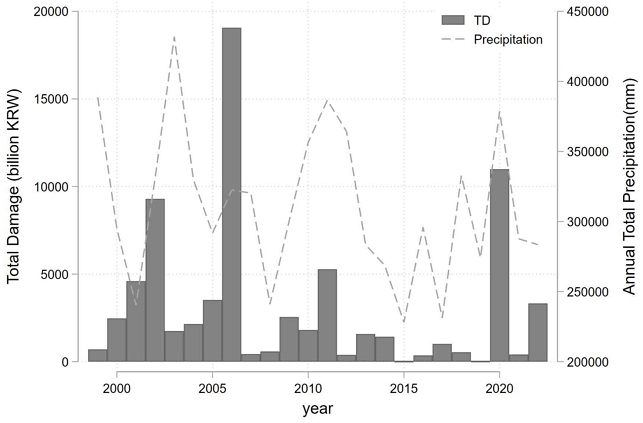
Trends in Annual Precipitation and Flood DamagesNote: The graph illustrates the yearly patterns of total rainfall and corresponding flood damages in South Korea. While some years with high rainfall coincide with greater damages, the overall correlation remains weak. This suggests that factors such as rainfall intensity and local vulnerability play a more decisive role in driving flood impacts. Flood damages are measured in billions of Korean Won (KRW).
Annual flood damages by type are presented in Figure 2. Particularly large damage peaks occurred in 2006, 2011, 2020, and 2022. Among damage categories, public facility damages―including roads, rivers, harbors, railways, military installations, and other public infrastructures—consistently account for the largest proportion. These public facilities span large geographic areas and, when damaged by floods, require substantial restoration costs, thereby generating considerable socioeconomic impacts following flood events. Agricultural damage is also significant due to insufficient drainage and flood-control infrastructure, leading to soil erosion, crop damage, and infrastructure deterioration. By contrast, areas equipped with effective flood prevention and drainage systems tend to experience relatively lower levels of damage, as they can quickly discharge runoff and minimize erosion or prolonged inundation.
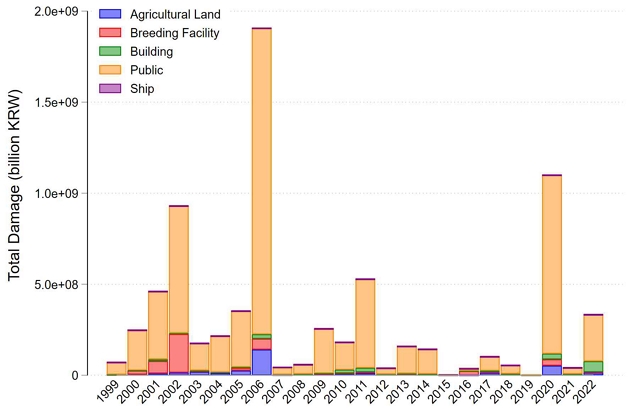
Trends in Flood Damages by CategoryNote: The graph shows the annual distribution of flood damages in South Korea by damage type. Major damage spikes occurred in 2011, 2020, and 2022. Public facility damages—including roads, rivers, railways, and other infrastructures—consistently account for the largest share, reflecting their wide exposure and high restoration costs. Agricultural damages are also significant, primarily due to inadequate drainage systems and flood protection in rural areas. In contrast, urban damage tends to be smaller, owing to more developed drainage and runoff systems. All damage values are expressed in billions of Korean Won (KRW).
2. Flood Mitigation Facilities and Rainfall Data
This study evaluates the effectiveness of two types of flood mitigation infrastructure: rainfall runoff storage facilities and sewage retention facilities.5) Facility-level information in the data includes geographic location, storage capacity, construction cost, and operational start date. Annual newly installed capacities of rainfall runoff storage facilities and sewage retention facilities are presented in Table 1. Installation of sewage retention facilities commenced steadily from the early 2000s, whereas rainwater retention facilities began widespread implementation around 2010 and have expanded rapidly in recent years.

Capacity of Newly Installed Rainwater and Sewage Storage Facilities(unit: 1000 m3)
Rainfall data, an essential factor for explaining flood damages, are obtained through the Korean Climate Information Portal's MK-PRISM (Modified Korean Parameter-elevation Regression on Independent Slopes Model) dataset. This dataset provides statistically interpolated, municipality-level gridded rainfall information, overcoming the spatial mismatch between station-level observations from the Korea Meteorological Administration (KMA) and the municipal-level analysis employed in this study.6) The MK-PRISM dataset covers from 2000 to 2019; however, as our damage data extend from 1999 to 2022, additional rainfall data for 1999 and 2020–2022 were constructed separately using the Thiessen polygon method. Specifically, average municipal rainfall was calculated based on observational data from 96 Automated Synoptic Observation System (ASOS) stations available through KMA’s public data portal.7)
The geographical distribution of flood mitigation facilities is shown in Figure A.1. Rainfall runoff storage capacities are predominantly located in Jeju Special Self-Governing Province, Jeollanam-do, and Gyeongsangnam-do, whereas sewage retention facilities have been installed mainly in Gwangju Metropolitan City, Busan Metropolitan City, and Gyeonggi-do. Notably, the geographic locations of these two facility types generally do not overlap significantly at the municipal-level.8) However, given the municipal-level analytical approach adopted in this study, several municipalities have both types of facilities installed within their boundaries.
To isolate and quantify the distinct effectiveness of each facility type, municipalities having both types of facilities are explicitly excluded from the empirical analysis. The geographical distinction presented in Figure A.1 underscores the necessity for separate analyses by facility type, ensuring clear identification and unbiased estimation of their individual flood mitigation effectiveness. The spatial heterogeneity evident in installation patterns further emphasizes the importance of careful analytical treatment in subsequent econometric modeling and inference.
Ⅲ. Empirical Methodology
Traditional engineering-based studies evaluating flood mitigation facilities typically employ ex-ante methods, such as simulations under hypothetical rainfall scenarios and assumed infrastructural conditions, to predict flood risks and facility effectiveness. In contrast, this study adopts an ex-post evaluation approach, empirically assessing the impact of flood mitigation facilities by quantitatively estimating reductions in actual observed flood damages following facility installations. Specifically, the present analysis focuses on two major facility types widely implemented for flood prevention in Korea: rainfall runoff storage facilities and sewage retention facilities.
According to Article 2 of the Sewerage Act of Korea, sewage retention facilities are defined as infrastructures designed to temporarily store sewage inflows to reduce pollutant discharge into rivers, oceans, or other public water bodies and to facilitate controlled sewage outflows. Consequently, these facilities serve multiple functions, including flood prevention and water quality improvement. However, in this study, only sewage retention facilities explicitly designed for flood prevention purposes are included in the empirical assessment.
As discussed in the previous section, the geographical units of this study are municipalities (si/gun/gu), generating a panel dataset where each observation consists of annual flood damage measured in monetary terms for each municipality from 1998 to 2022. The purpose of the estimation is to identify the effects of facility installation on flood damage reduction. However, naive comparisons between municipalities with and without flood mitigation facilities are likely to produce biased estimates. For instance, municipalities that invest in flood mitigation infrastructure are typically those already at higher risk of flooding. Consequently, despite having such facilities, these municipalities might still experience greater damages compared to municipalities without facilities. Likewise, a simple before-and-after analysis also poses analytical problems, as annual flood damages vary significantly depending on rainfall variability. For example, consistently higher rainfall after facility installation could still lead to increased damages, potentially masking the true mitigating effect of the facilities.
These issues highlight the importance in precisely attributing observed changes in flood damages solely to the installation of flood mitigation infrastructure rather than to external factors such as variability in precipitation or local socioeconomic characteristics. Thus, accurately estimating the causal impact of flood mitigation facilities on damage reduction requires a rigorous causal inference approach capable of controlling for potential confounding factors. Applying causal inference methodologies provides more reliable estimates of policy impacts, thereby offering robust evidence for future policy decision-making.
This study employs a two-way fixed effects (TWFE) regression model to evaluate the causal impacts of flood mitigation facilities on flood damages. The TWFE model controls for both time-invariant municipal characteristics and common year-specific shocks, effectively isolating the variation in damages attributable specifically to facility installation. The TWFE approach is widely recognized as a generalized form of the difference-in-differences (DiD) methodology, which traditionally compares treatment and control groups across two periods. While conventional DiD analyses are limited to two periods and two groups, the TWFE method accommodates panel data consisting of multiple periods and groups, making it particularly flexible and powerful for policy evaluation (Angrist and Pischke, 2009).
As previously discussed, both rainfall runoff storage facilities and sewage retention facilities share common objectives and were widely implemented starting around 2010, presenting challenges for simultaneously estimating their distinct effects within a single regression model. Fortunately, municipalities containing both types of facilities simultaneously are rare, with only six such municipalities identified through 2022.9) Given the limited number of municipalities having both types of facilities, excluding these municipalities from the analysis does not significantly reduce sample size, allowing for separate and clear identification of each facility’s impact. Thus, municipalities containing both facility types are excluded from the subsequent analysis.
The TWFE regression model adopted in this study can be expressed as follows:
| (1) |
where Yit denotes the natural logarithm of monetary flood damages in municipality i at year t. Dit is a binary treatment variable indicating whether municipality i had installed a flood mitigation facility (rainfall runoff or sewage retention facility) by year t. Xit is a vector of other control variables affecting flood damage, particularly annual rainfall and rainfall intensity. αi and δt represent municipality and year fixed effects, respectively, controlling for time-invariant characteristics and common annual shocks. Finally, εit is an error term capturing unobserved determinants of flood damages, and standard errors are robustly clustered at the municipal-level.
Specifically, the dependent variables analyzed include logged monetary values of total flood damages, building damages, public facility damages, agricultural damages, and livestock damages, measured at the municipal level. The key explanatory variables include annual total precipitation and maximum daily rainfall. While total annual rainfall is conventionally considered a critical explanatory factor, the intensity of short-duration rainfall events can be more directly related to observed flood damages.10) As a result, even when total annual precipitation remains the same, variations in its temporal distribution can lead to significantly different flooding impacts. Therefore, this study explicitly incorporates the maximum daily rainfall in municipality in year as an additional explanatory variable, capturing the influence of rainfall intensity and concentration on flood damages.
Ⅳ. Results
1. Overall Effects of Flood Mitigation Facilities
Table 2 presents the estimation results of the TWFE model for rainfall runoff storage facilities. The results indicate that the installation of rainfall runoff storage facilities significantly reduces flood-related damages across all categories examined, including total damages, building damages, public facility damages, agricultural land damages, and livestock facility damages.
Estimation Results of Rainwater Retention Facilities on Flood Damage Reduction
It is important to interpret these estimates carefully; the policy variable coefficients for Dit represent the difference between actual observed damages and the counterfactual scenario in which the same municipalities had not installed the flood mitigation facilities. Quantitatively, municipalities with rainfall runoff storage facilities experienced substantial and statistically significant damage reductions compared to those without facilities. Specifically, total flood damages decreased by approximately 71.7%, building damages by 69.7%, public facility damages by 60.0%, and agricultural damages by 56.1%.11) These results strongly suggest that rainfall runoff storage facilities are effective in reducing actual flood damages. In addition to verifying the effectiveness of flood mitigation facilities, it is important to confirm whether our empirical model is consistent with intuitive expectations regarding key explanatory variables. Both annual total precipitation and maximum daily rainfall intensity positively and significantly affected flood damages, aligning with intuitive expectations. For example, each additional 1 mm of maximum daily rainfall was associated with approximately a 2.2% increase in total damages, emphasizing the importance of rainfall intensity as an important variable affecting flood risk.
Considering the policy objective of rainfall runoff storage facilities which primarily targets urban flood mitigation associated with expanded impermeable surfaces, Table 3 restricts the sample to urban municipalities (excluding rural “gun” districts). The results from the sample excluding rural districts demonstrate even stronger effectiveness, with total damages decreasing by approximately 81.0%. This indicates that the rainfall runoff storage facilities implemented since 2010 have been highly effective in achieving their intended goal of urban flood prevention.
Estimation Results of Rainwater Retention Facilities on Flood Damage Reduction: Excluding Rural Area
In contrast to the rainfall runoff storage facilities, sewage retention facilities have multiple purposes, including flood control, water quality improvement, and wastewater reuse, and generally have smaller storage capacities compared to rainfall runoff storage facilities. According to the Sewerage Act of Korea, sewage retention facilities store peak wastewater flows temporarily during heavy rainfall, reducing downstream flooding and pollutant discharges. Given their multifunctionality, this paper focuses on sewage retention facilities explicitly aimed at flood mitigation. Table 4 presents the results for sewage retention facilities, showing statistically significant reductions only for building damages at the 10% level. No significant reductions were found for total damages, public facility damages, agricultural damages, or livestock damages. Annual rainfall and maximum daily rainfall intensity continued to exhibit statistically significant positive impacts on damages.
Estimation Results of Sewage Retention Facilities on Flood Damage Reduction
Table 5 reports the estimation results for sewage retention facilities specifically in urban municipalities. In this subsample, sewage retention facilities were associated with approximately an 87.3% reduction in building damages. However, this effect should be interpreted carefully, as sewage retention facilities typically operate alongside other urban drainage infrastructures such as pipelines and pumping stations. Thus, the observed damage reductions likely reflect combined effects of integrated drainage systems, and precisely separating the isolated contribution of sewage retention facilities remains challenging due to the data limitations.
Estimation Results of Sewage Retention Facilities on Flood Damage Reduction: Excluding Rural Areas
2. Temporal Heterogeneity in Facility Effectiveness: Pre- and Post-2017 Comparison
To further examine the effectiveness of retention facilities over time, this study divides the sample based on the timing of facility installations—specifically comparing regions where facilities were installed before and after 2017. The rationale for choosing 2017 as the threshold is based on observed differences in installation patterns rather than a strict chronological criterion.12)
As illustrated in Figure A.2 and A.3, prior to 2017, rainfall runoff storage facilities were mainly installed in regions such as Gyeongsangnam-do, Jeollanam-do, and Jeollabuk-do. Installations of rainfall runoff storage facilities rapidly increased in Jeju Special Self-Governing Province after 2017. Sewage retention facilities were mainly installed in Busan, Gwangju, Gyeonggi-do, and Gyeongsangnam-do during the same period, but their installation shows a marked decline after 2017. However, a clear mismatch was observed between the spatial distribution of flood mitigation facilities and the actual flood damages. This discrepancy suggests that the retention facilities may not fully achieve their intended purpose of urban flood prevention in some regions. For example, despite significant flood risks, including dense underground utilities such as water, sewage, and telecommunication networks, Seoul faces physical constraints limiting new installations. In addition, earlier installations might have targeted the most vulnerable regions, potentially leaving less vulnerable areas to have installations after 2017.
Table 6 reports the estimation results separately for facilities installed before and after 2017, focusing on total flood damages for rainfall runoff storage facilities and building damages for sewage retention facilities. The results indicate significant damage reductions associated with facilities installed before 2017. In contrast, while the coefficients for post-2017 installations remain negative, those are no longer statistically significant. The results suggest that recently installed facilities may not achieve the expected damage reduction effects, potentially due to factors such as implementation timing, geographical targeting, or violations of the common trend assumption underlying the TWFE model.
Estimation Results of Sewage Retention Facilities on Flood Damage Reduction: Before and After 2017
Our results should be interpreted carefully. Specifically, the comparison groups used to estimate the effects for sewage retention facilities after 2017 consist of municipalities that may have experienced relatively minor flooding, since regions severely damaged earlier installed facilities before 2017 and thus were excluded from the post-2017 analyses. Consequently, the comparison groups may exhibit systematically lower baseline damages, potentially leading to an underestimation of the actual damage reduction effect of facilities installed after 2017. To address this limitation, future research should expand the sample period or incorporate complementary engineering-based analyses to validate and refine the empirical findings.
Ⅴ. Conclusion
As climate change intensifies, the frequency and severity of extreme precipitation and flooding events have increased globally. Urban areas, characterized by high population density and expanding impermeable surfaces, are particularly vulnerable, underscoring a need for effective policy measures to mitigate urban flooding risks. In this context, this study contributes to the literature by empirically evaluating the effectiveness of two prominent urban flood mitigation infrastructures―rainfall runoff storage facilities and sewage retention facilities―providing robust empirical evidence to guide future policy directions and infrastructure investments.
Utilizing panel data on flood damage and climate conditions at the municipal-level in Korea, this study employs an econometric method to quantify the causal effects of facility installations on flood damages. The major findings and conclusions of this analysis are summarized as follows. First, rainfall runoff storage facilities demonstrate substantial effectiveness in reducing flood damages. In the full sample analysis, total flood damages decreased by approximately 71.7%, with statistically significant reductions observed across various damage categories, including buildings, public facilities, agricultural lands, and livestock facilities. When the analysis was limited to urban municipalities excluding rural areas, the total flood damages declined by approximately 81.0%. These results clearly indicate that rainfall runoff storage facilities effectively achieve their intended objective of urban flood mitigation. Second, sewage retention facilities exhibit relatively limited flood mitigation effectiveness. Statistically significant damage reductions were observed only for building damages, while the effects on total damages, public facility damages, agricultural land damages, and livestock facility damages were statistically insignificant. The limited effectiveness may arise from the multifunctional nature of sewage retention facilities, which focus not only on flood mitigation but also water quality improvement and wastewater reuse. In addition, their generally smaller storage capacities relative to rainfall runoff storage facilities may constrain the ability to significantly mitigate damages during severe flood events. Third, climatic variables―annual total precipitation and maximum daily rainfall intensity―emerge as critical determinants of flood damages. In particular, the maximum daily rainfall intensity exhibited substantial positive correlations across all damage categories, highlighting that short-duration, high-intensity rainfall events significantly exceed drainage and sewer system capacities, thereby causing severe flooding. This finding suggests that future facility policies should focus not only on increasing storage capacities but also on enhancing drainage infrastructure to effectively cope with intensified rainfall patterns under climate change.
Based on our empirical results, several policy implications can be derived. Given their demonstrated effectiveness, rainfall runoff storage facilities should be prioritized and expanded, particularly in areas experiencing rapid urbanization or recurrent flood events. Conversely, because sewage retention facilities serve multiple purposes beyond flood control, future evaluations of their effectiveness should incorporate comprehensive analyses considering integration with related drainage and sewerage infrastructure. Furthermore, given the observed mismatch between facility locations and actual flooding damages in some regions, quantitative criteria―including historical flood records, urbanization levels, and existing drainage infrastructure―should be systematically integrated into site selection processes for new facilities. In addition, the significant role of maximum daily rainfall intensity in driving flood damages underscores the need to strengthen flood mitigation infrastructure capacity to manage short-duration, intense rainfall events. Finally, institutionalization of regular ex-post empirical evaluations is recommended to systematically monitor and improve policy effectiveness over time. However, this study is limited by its focus on the installation of facilities. Future research is needed to examine qualitative attributes, including scale of facilities and the integration of emerging technologies like AI-driven systems.
Acknowledgments
This work was supported by Chungnam National University. It was also supported by “Research Base Construction Fund Support Program” funded by Jeonbuk National University in 2024.
Notes
References
-
Aloscious, Arun Antony, Mario Artuso, and Sara Torabi Moghadam, 2025. “Nature-based solutions for flood mitigation: The case study of Kochi,” Sustainability 17(5): 1983.
[https://doi.org/10.3390/su17051983]

-
Angrist, Joshua D., and J¨orn-Steffen Pischke, 2009, Mostly harmless econometrics: An empiricist’s companion. Princeton University Press.
[https://doi.org/10.1515/9781400829828]
-
Ballocci, Marta, Daniela Molinari, Giovanni Marin, Marta Galliani, Alessio Domeneghetti, Simone Sterlacchini, and Francesco Ballio, 2024, “Econometric modelling for estimating direct flood damage to firms : A local-scale approach using post-event records in Italy,” EGUsphere, (November).
[https://doi.org/10.5194/egusphere-2024-3017]
-
Choi, Hyun Gu, Kun Yeun Han, Jae Eung Yi, and Wan Hee Cho, 2012, “Study on installation of underground storage facilities for reducing the flood damage (in korean),” Journal of the Korean Society of Hazard Mitigation, 12(4), pp. 115–123.
[https://doi.org/10.9798/KOSHAM.2012.12.4.115]
-
Kim, Hyung Jun, Deok Won Bae, and Kwang Seok Yoon, 2011, “Experimental study for analysis of flood mitigation effect by detention basin (in Korean),” Journal of the Korean Society of Hazard Mitigation, 11(6), pp. 281–291.
[https://doi.org/10.9798/KOSHAM.2011.11.6.281]
- Korea Meteorological Administration, 2022, “Climate statistics analysis: Changma (in Korean),” https://data.kma.go.kr/climate/rainySeason/selectRainySeasonList.do, , [검색일자: 2024.02.23.]
- Ministry of the Interior and Safety, 2022, “2022 annual disaster report (in Korean)” Available from Ministry of the Interior and Safety, Republic of Korea.
-
Mutlu, Asli, Debraj Roy, and Tatiana Filatova, 2023, “Capitalized value of evolving flood risks discount and nature-based solution premiums on property prices”, Ecological Economics, 205(November 2022):107682.
[https://doi.org/10.1016/j.ecolecon.2022.107682]
-
Park, Changyeol, and Sang Young Shin, 2014, “A comparative analysis on the flood reduction effects of stormwater storage and infiltration measures at a catchment scale (in Korean),” Journal of the Korean Society of Hazard Mitigation, 14(4), pp. 321–332.
[https://doi.org/10.9798/KOSHAM.2014.14.4.321]
-
Park, Chanil, Min Jee Kang, Jaeyoung Hwang, Hyeong Oh Cho, Sujin Kim, and Seok Woo Son, 2024, “Multiscale drivers of catastrophic heavy rainfall event in early August 2022 in South Korea,” Weather and Climate Extremes, 44 (September 2023):100681.
[https://doi.org/10.1016/j.wace.2024.100681]
-
Pirone, Dina, Luigi Cimorelli, and Domenico Pianese, 2024, “The effect of flood-mitigation reservoir configuration on peak-discharge reduction during preliminary design,” Journal of Hydrology: Regional Studies, 52.
[https://doi.org/10.1016/j.ejrh.2024.101676]
-
Shu, Evelyn G., Jeremy R. Porter, Mathew E. Hauer, Sebastian Sandoval Olascoaga, Jesse Gourevitch, Bradley Wilson, Mariah Pope, David Melecio-Vazquez, and Edward Kearns, 2023, “Integrating climate change induced flood risk into future population projections,” Nature Communications, 14(1), pp. 1–9, 2023.
[https://doi.org/10.1038/s41467-023-43493-8]
-
Sohn, Wonmin, Samuel D. Brody, Jun Hyun Kim, and Ming Han Li, 2020, “How effective are drainage systems in mitigating flood losses?,” Cities, 107 (September):102917.
[https://doi.org/10.1016/j.cities.2020.102917]
-
Tabari, Hossein, 2020, “Climate change impact on flood and extreme precipitation increases with water availability,” Scientific Reports, 10(1), pp. 1–10.
[https://doi.org/10.1038/s41598-020-70816-2]
-
Wing, Oliver E.J., William Lehman, Paul D. Bates, Christopher C. Sampson, Niall Quinn, Andrew M. Smith, Jeffrey C. Neal, Jeremy R. Porter, and Carolyn Kousky, 2022, “Inequitable patterns of US flood risk in the Anthropocene”, Nature Climate Change, 12(2), pp. 156–162.
[https://doi.org/10.1038/s41558-021-01265-6]
-
Zhou, Kejing, Fanhua Kong, Haiwei Yin, Georgia Destouni, Michael E. Meadows, Erik Andersson, Liding Chen, Bin Chen, Zhenya Li, and Jie Su, 2024, “Urban flood risk management needs nature-based solutions: a coupled social-ecological system perspective,” Urban Sustainability, 4(1).
[https://doi.org/10.1038/s42949-024-00162-z]
Appendix
❚Supplementary❚
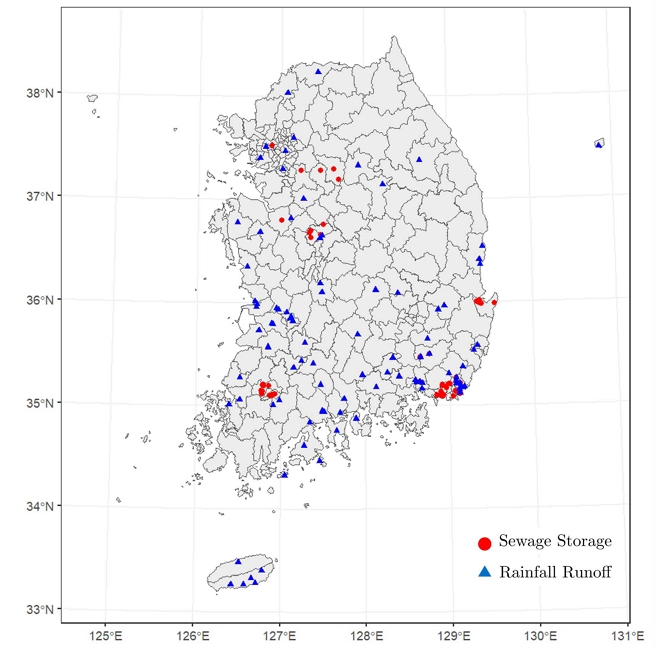
Locations of Rainwater and Sewage Retention Facility InstallationsNote: This map displays the municipal distribution of rainwater runoff storage and sewage retention facilities across South Korea. The two facility types exhibit limited geographic overlap at the municipal level, forming the basis for separate empirical analyses
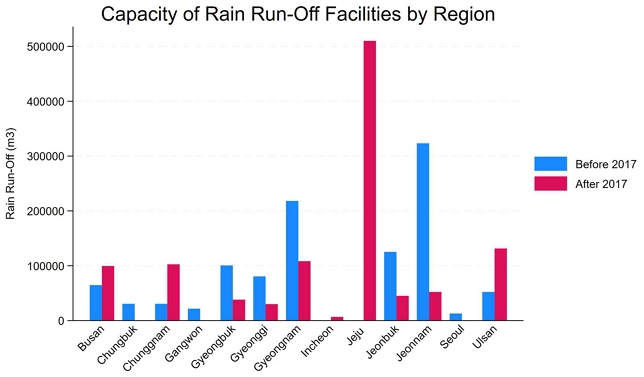
Regional Rainwater Retention Facility Capacity: Before and After 2017Note: This figure illustrates changes in regional rainwater retention capacity, showing a notable increase in installations after 2017, particularly in Jeju Province
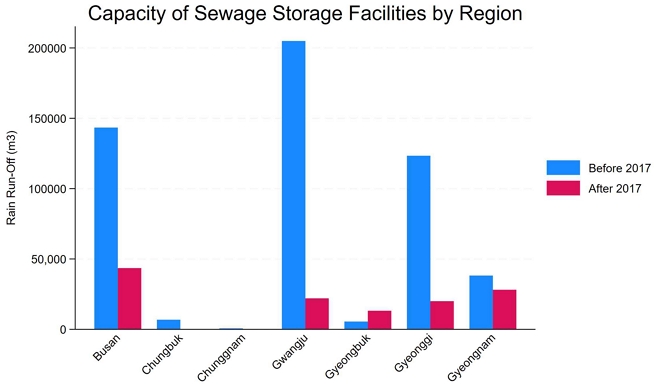
Regional Sewage Retention Facility Capacity: Before and After 2017Note: This figure presents the regional distribution of sewage retention capacity, with earlier installations concentrated in areas such as Ulsan, Jeollanam-do, and Gyeonggi-do
Donggyu Yi: He is an associate professor in the School of Economics at University of Seoul. He received his PhD in Economics from Iowa State University. His research interests include taxation, public policy – design and evaluation, and valuation (dgyi77@uos.ac.kr).
Heesun Jang: She is an associate professor in the Department of Food and Resource Economics at Korea University. She received her PhD in Applied Economics from the University of Wisconsin-Madison. Her current research interests include Environmental and Resource Economics, Energy Economics, and Applied Microeconomics (heesunjang86@korea.ac.kr).
Hocheol Jeon: He is an assistant professor in the Department of Economics at Chungnam National University. He earned his PhD in Economics from Iowa State University. His research focuses on Environmental and Resource Economics and Applied Microeconometrics(hcjeon@cnu.ac.kr).